
Towards sustainable flow with clarified modes of interactions (Thought)
Making the mode of interaction between teams explicit can help manage context load, improve flow, and clarify mutual expectations.

The key thing I’ve been thinking about recently is how much the mode of interaction between teams shapes expectations, flow, context load, and ownership of artifacts. These topics are covered in Team Topologies, which I’ve been diving into, and it has been an eye-opener.
Given two teams (or companies or individuals), we can ask what is their mode of interaction? Are teams collaborating? Is one team providing X-as-a-service? Is one team coaching or facilitating another? Or is the interaction fuzzy and undefined? These modes lead to different modes of ownership and expectations.
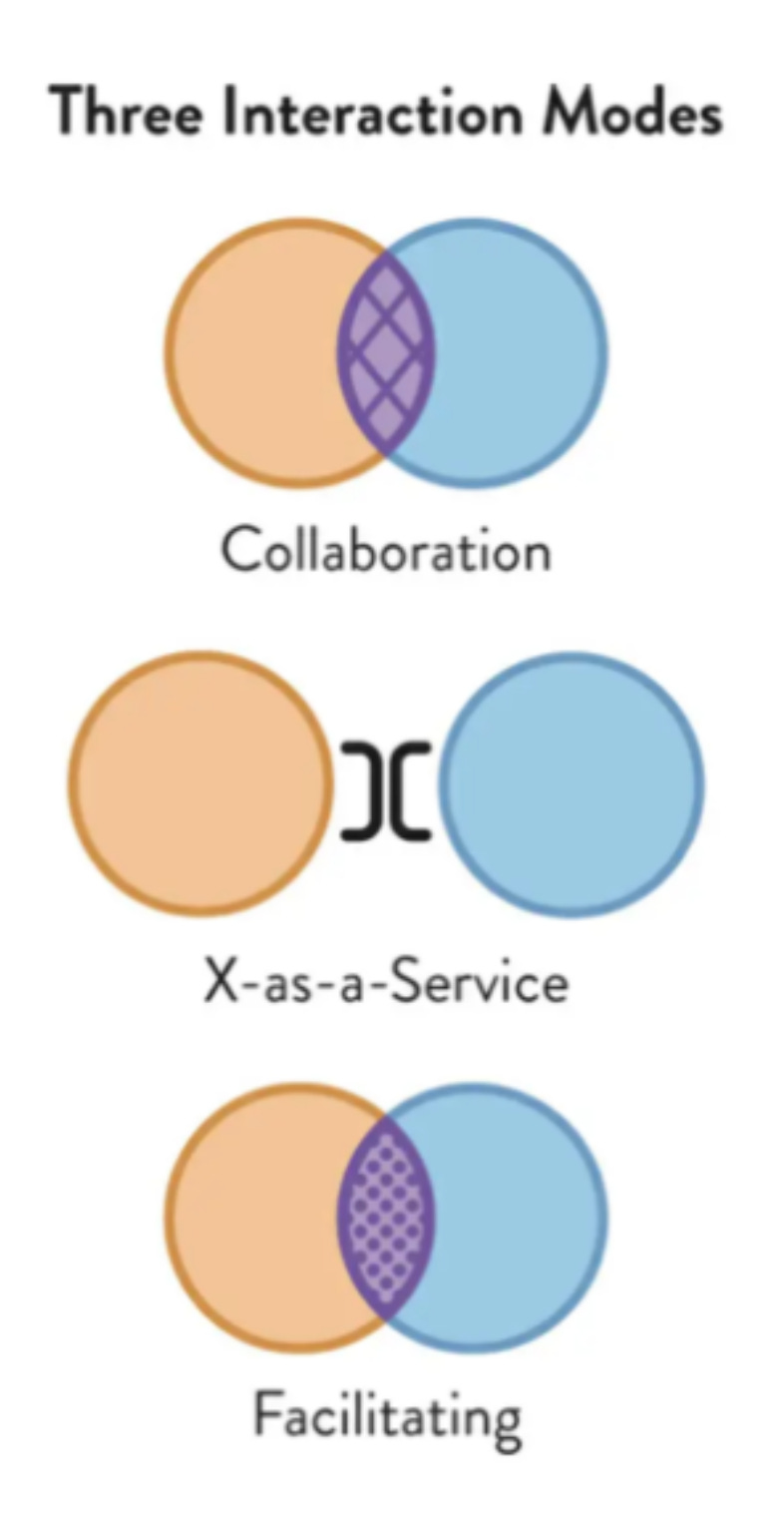
For example, if Team A provides X-as-a-service to Team B, Team B can expect certain quality, up-to-date, and usable documentation, as well as access to knowledge-sharing sessions on new topics. Team A also likely owns the artifacts and documentation, and expects Team B to follow the prescribed way. All with the aim of lowering context load and achieving a more sustainable flow for Team B.
On the contrary, if teams are expected to collaborate, the context load for both teams increases. The cost of extra context load then needs to be weighed against the benefits of collaboration. Current context load needs to be considered as well; what if it’s already too high? In collaboration, artifacts are likely co-owned, and expectations revolve around engagement.